
Floor tile and adhesive testing in Stoke-on-Trent
Old vinyl floor tiles and the black adhesive under them are a common surprise when a floor is lifted. Testing before you lift them avoids spreading dust through the house.
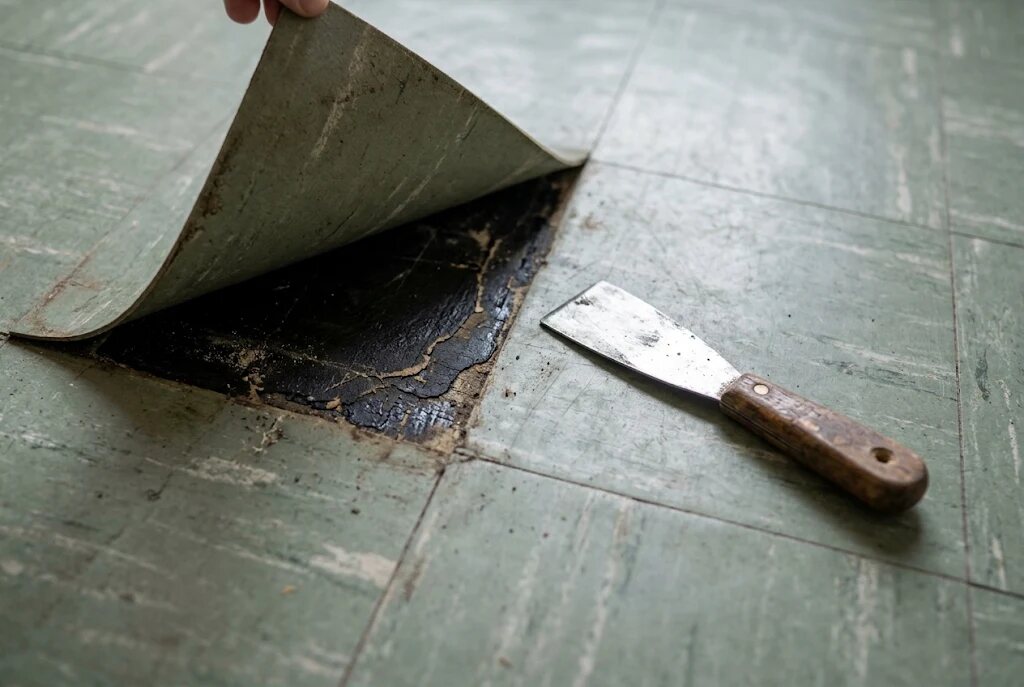
Where they are found
Square vinyl or thermoplastic tiles from the 1950s to the 1980s, often 9 inch or 12 inch, and the black bitumen glue under them. They turn up in kitchens, hallways, bathrooms and under newer carpets and laminates in older houses and flats.
Test before you lift
Some tiles and some adhesives contained asbestos. Lifting, breaking or sanding them can release fibres. A sample of both the tile and the adhesive can be analysed so you know what you are dealing with before the floor is disturbed.
If a floor is intact and covered, it is often best left alone until you have a result and a plan.
If the result is positive
Options include leaving the floor covered, overlaying it, or having it removed by a contractor using suitable methods. The contractor will advise which makes sense for your building.
Who does the work, and what the law expects
Kilnbrook Asbestos Surveys is an introduction service. We pass your details to an independent contractor, who provides the quote, takes the samples or carries out the survey, and holds the insurance and any competence they need. Samples are analysed by a laboratory and the result is issued in writing. Taking samples or surveying a building is work with real exposure risk, so it should be done by trained people with dust controls, and the sample should be bagged, sealed and labelled correctly.
What to send us
- Two or three clear photos of the material and where it is
- The room, roof or area, and roughly how much of it
- The age of the building if you know it
- What work is planned, and when, if any
- Whether the building is occupied or in use
Prices on this site are guides only. Only the contractor's written quote counts.
How it works.
- 1
Send details and photos
Say what the material is, where it is and the age of the building. Clear photos help.
- 2
Contractor replies
An independent local contractor reviews your enquiry and confirms in writing what they can sample and what it would involve.
- 3
Sample taken
A small sample is taken with controls to limit dust, sealed and labelled.
- 4
Laboratory result
The sample is analysed and you receive a written result you can show to builders.
What affects the price.
- Area of floor and number of layers
- Access to a hidden corner or edge to sample
- Whether the adhesive also needs testing
- Result turnaround wanted
- Whether a later floor covering sits on top
Good to know.
Can I lift one tile to check?
It is better not to. Lifting can break the tile and the adhesive, which is exactly what you want to avoid before you know the result.
Is the black glue the problem?
It can contain asbestos in older floors, so it is usually sampled too.
Can I lay new flooring over old tiles?
Often yes, if the old floor is intact and a result or an overlay plan is in place. Ask the contractor.
How long does it take?
Sampling is quick. Results often come back within a few working days.
Do you do the testing yourselves?
No. We are an introduction service. We pass your details and photos to an independent local contractor, who provides the quote, takes the samples and arranges the laboratory analysis.
What should I send?
Two or three clear photos, what the material is and where it is, the age of the building if you know it, and a postcode. A phone photo is fine.
Can I take a sample myself?
It is not recommended. Cutting, scraping or drilling can release fibres. Leave the material alone and have a trained person take the sample.
Where we cover.
Stoke-on-Trent, its neighbourhoods and the towns and villages around it.
Tell us what needs testing.
A local contractor reviews your details and photos, then replies with a written quote for sampling or a survey. Free to ask, no obligation.
Prefer to talk?
01782 000 000